On Signing Work
I was recently very lucky to be able to publicly associate my name with a tangible form of my work. It’s an opportunity that comes infrequently in my profession.
We rely on machines to create things that are perfectly similar - 3D printing, injection molding, computer aided milling, and more. To manufacture at scale, widgets must be exactly interchangable. We’ve spent the better part of 200 years iterating and perfecting the inustrialization of our economy and fungibility of goods.
And yet, we still rely on people. A person has to create the CAD model that a fabrication machine consumes. A person must service that machine and another must erect the structures that contain those machines. A cynic may say with resignation that industry only relies on people because they must. Look no further than the excitement over generative AI and the prospect some may be able to eliminate need for humans.
An optimist will say with resolve that industry relies on people because they must. Not only has there always been a market for products which are infused with humanity, there has only ever been a market for products infused with humanity. The Copernican principle suggests we will not see an end to demand for humanity in our lifetime.
I’m not very interested in discussions on what constitutes art. Debate over whether work meets a bar where it transcends one classification to another may be interesting in some contexts but it has no bearing in my assessment of whether it contains humanity. When you touch something, you leave a fingerprint. For any sufficiently involved task, no two people will accopmlish it exactly the same way. This is the humanity I believe there is limitless demand for. Labor is fundamentally creative, and any creative work is inherently of value. It’s not radical to suggest. Everyone expects to be paid for their effort. There is a validity in the idea of the dignity of labor, even as it is weaponized against the less fortunate.
And yet we increasingly find ourselves unfamiliar with the humanity behind what we consume. The amount we’re willing to spend on a creation is rapidly approaching zero. I’ll often share a link of a cool new app or innovative service to friends and family only to be met with lamentations that it is not free. We’ve become conditioned to be completely unaware of what effort goes into what we consume. Whether it’s an application developer in a cubicle or seamstress in a sweatshop, the only thing present in our mind is the cost we bear and not the value we receive. It’s no wonder that when we’re unwilling to pay anything for journalism we find ourselves morally unphazed at LLMs hoovering up, anonymizing, and regurgitating all text on the internet.
A powerful way way we have to push back against this is to sign our work. To state proudly when we create something, not just prompt for something.
It seems to me that “Pride” is today frequently resolved to conceit or narcism. While that is certainly a valid description, oxford and webster both also recognize self-esteem, self-respect, and belonging in their definitions. We would do well to learn from those in the civil rights, feminist, and lgbt struggles, reclaiming pride from the puritanical. Maslow tells us that belonging and esteem are fundamental steps along the path to actualization. Far from avoiding pride, we should seek it to become the most full version of ourselves possible.
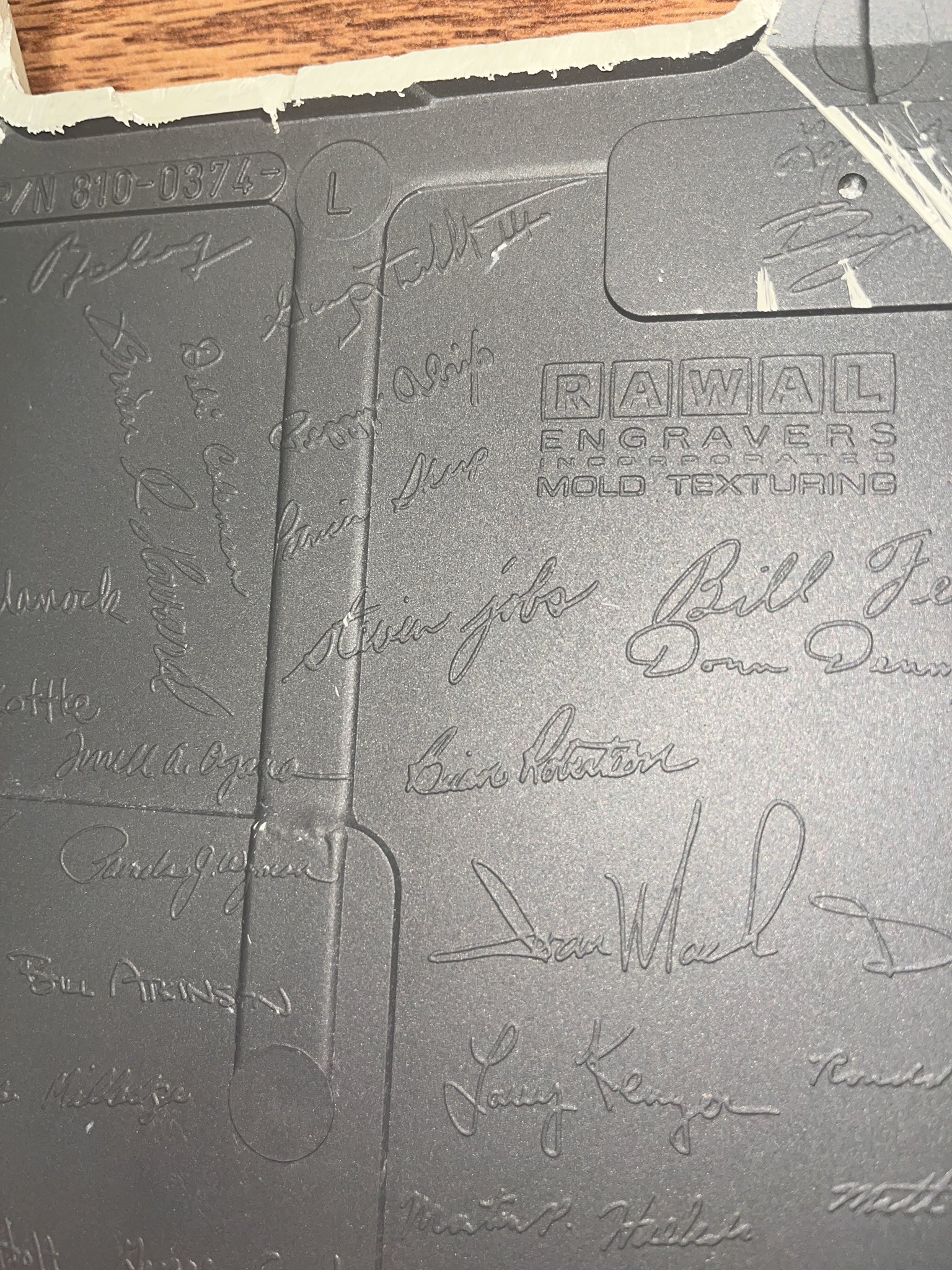
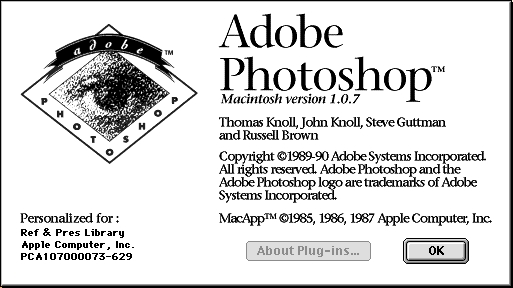
In technology, we used to do more to claim credit. In 1984, the Macintosh team had their signatures placed on the injection mold of the original 128k model. Applications often listed programmers, designers, and other team members in their about boxes.
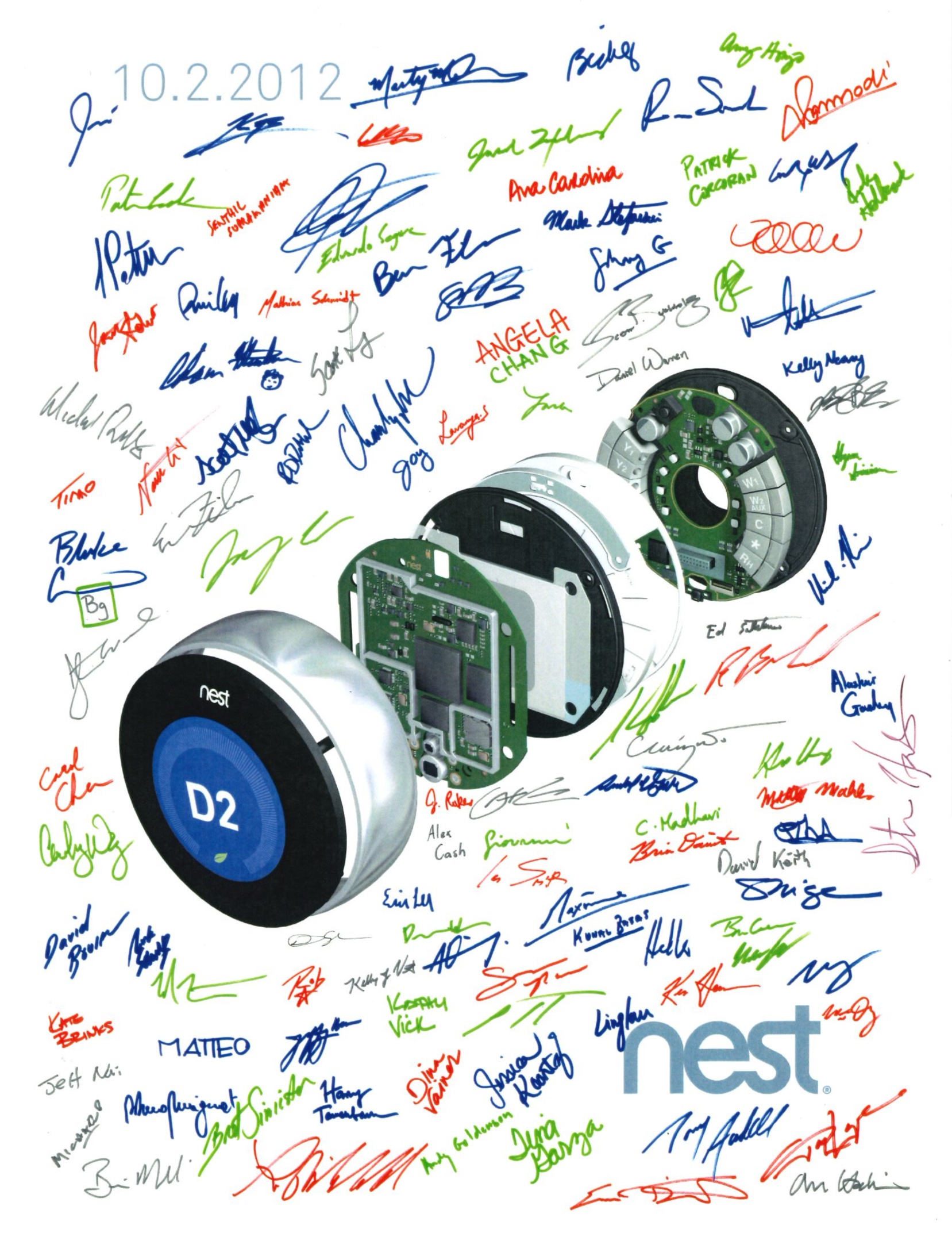
Sometimes we still tip-toe up to the precipice of claiming credit. In 2012, I was lucky enough to work on the 2nd generation Nest Learning Thermostat. The whole team signed a poster, and copies were distributed internally. It was never pubblished for general audiences. Outside of a line on a CV or linkedin, there is little tangible to prove I was there.
We can do better. There are examples we can follow. To my mind, the most visible form of credit for work in our modern world belongs to the film industry. Thanks to the hard work of unions such as the WGA, SAG, IATSE, and DGA for a century, the name of nearly every individual who works on television and movies gets to have their name associated with their work. They were not gifted the recognition they deserved, they fought for it. And our culture recognizes their humanity because of it.